

Radiant Floor Company pioneered the use of on-demand/tankless water heaters for radiant floor heating nearly 25 years ago, when many in the heating industry believed that “on-demand / tankless water heaters would never work for radiant heat”. We disagreed and have proved them wrong with great success!
As the name implies, Tankless/on-demand heaters supply hot water only when needed and don’t store large volumes of water. The result is a heater up to 34% more efficient than a conventional tank-type unit.
And for the record, every tankless/on-demand water heater that Radiant Floor Company sells is DESIGNED & RATED FOR SPACE HEATING”!
NAVIEN HEATING UNITS

These on-demand/tankless water heaters are manufactured with long lasting, durable, dual stainless steel heat exchangers. Quiet, compact, and wall-mounted, they vent with 2” PVC pipe for both intake and exhaust. Why is that important? Easy installation for one. Even more crucial, these so-called “direct vent” heaters use outside air for combustion instead of the precious inside air you’ve just spent energy to heat. In addition (and this is true of all on-demand units), the heater only makes hot water when you need it. There is no tank full of 125-degree water leaking warm BTU’s into the surrounding air 24 hours a day, a condition called “standby loss”. That feature alone can save 10% on fuel costs.
Navien units are rated up to 96% efficiency.
Detailed information and specifications for these units can be found here.

A.O. SMITH / American Water Heater tankless/on-demand water heaters are a less expensive option, but still offer many excellent features. They’re extremely well engineered, also very quiet, compact (2.2 cu. ft. – great for small spaces), lightweight (60 lbs.), can mount conveniently on a wall, vent easily with PVC like the Navien, and have a well-deserved reputation for reliability and durability. A.O. Smith uses copper for their primary heat exchanger, stainless steel for the secondary. The heater plugs into a standard wall outlet and triggers when it senses flow – an open tap when heating domestic hot water, circulator pump(s) when heating the floor. A digital display indicates incoming and outgoing water temperatures, flow rate, flashes error codes for troubleshooting, and allows the user to set the unit for a variety of different temperature settings. Like all sophisticated on-demand heaters, the A.O. Smith monitors incoming and outgoing water temperatures and modulates its burner up or down for maximum efficiency. Maintenance is simple – basically the fine-mesh inlet screen that should be checked periodically and kept clean. Note: New installations may require a short period of daily cleaning until soldering flux and minor debris has been screened from the system.
A.O. SMITH water heaters are truly instantaneous and extremely powerful, and the following example perfectly illustrates this claim.
Several years ago, one of our techs installed a A.O. Smith on-demand / tankless water heater to heat his 2100 sq. ft. garage. The slab was literally ice cold due to weeks of sub-freezing weather. After filling the system with anti-freeze, he fired up the radiant system and watched 28 degree fluid leave the floor, enter the A.O. Smith, then emerge from the heater five seconds later at 180 degrees! Amazingly, the unit had raised the water temperature 152 degrees!
Of course, a mixing valve was used to temper the water down to 130-degrees before it returned to the floor, but this example shows how an on-demand water heater performs under extreme conditions.
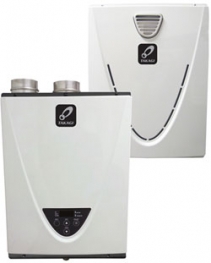
Detailed information and specifications for these units can be found here. A.O. Smith units are rated up to 96% efficiency.
For schematics and photos of these A.O. SMITH tankless / on-demand water heaters in various radiant heating configurations, see: Takagi and radiant heat
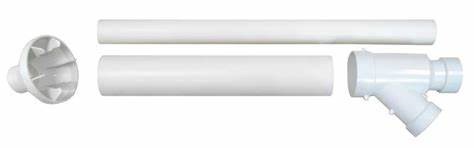
The concentric vent kit
All fossil fuel appliances need air for combustion. A concentric vent kit prevents the on-demand heater from using your home’s expensively heated inside air for that process. It also allows for a cleaner, “one hole” venting installation.
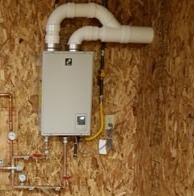
Basically a smaller pipe inside a larger one (see photo below), the inner pipe exhausts warm fumes while intaking, and pre-warming, the cold outside air.
-

- Complete concentric vent kit
-

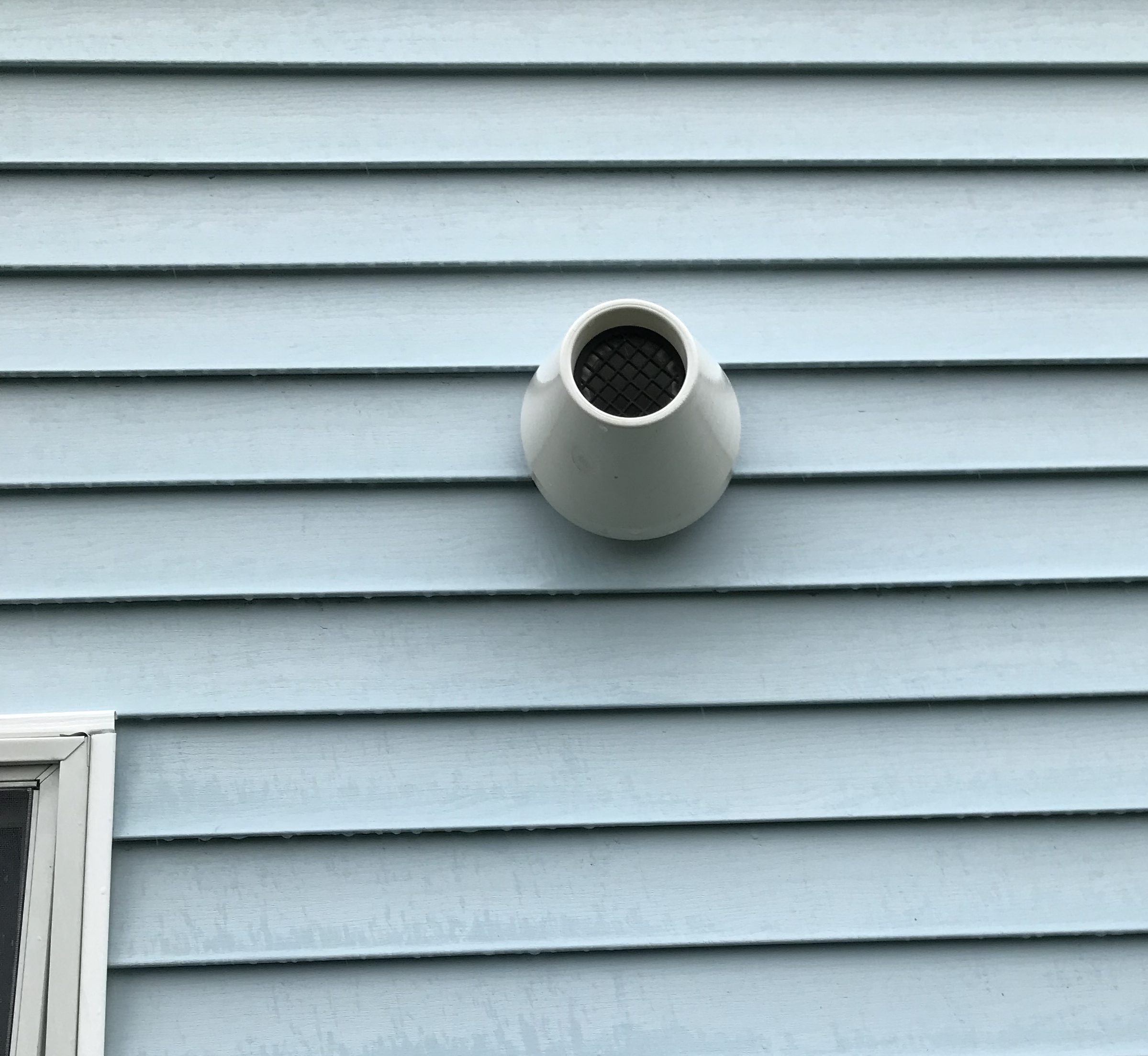
- Front view of finished vent installation
-

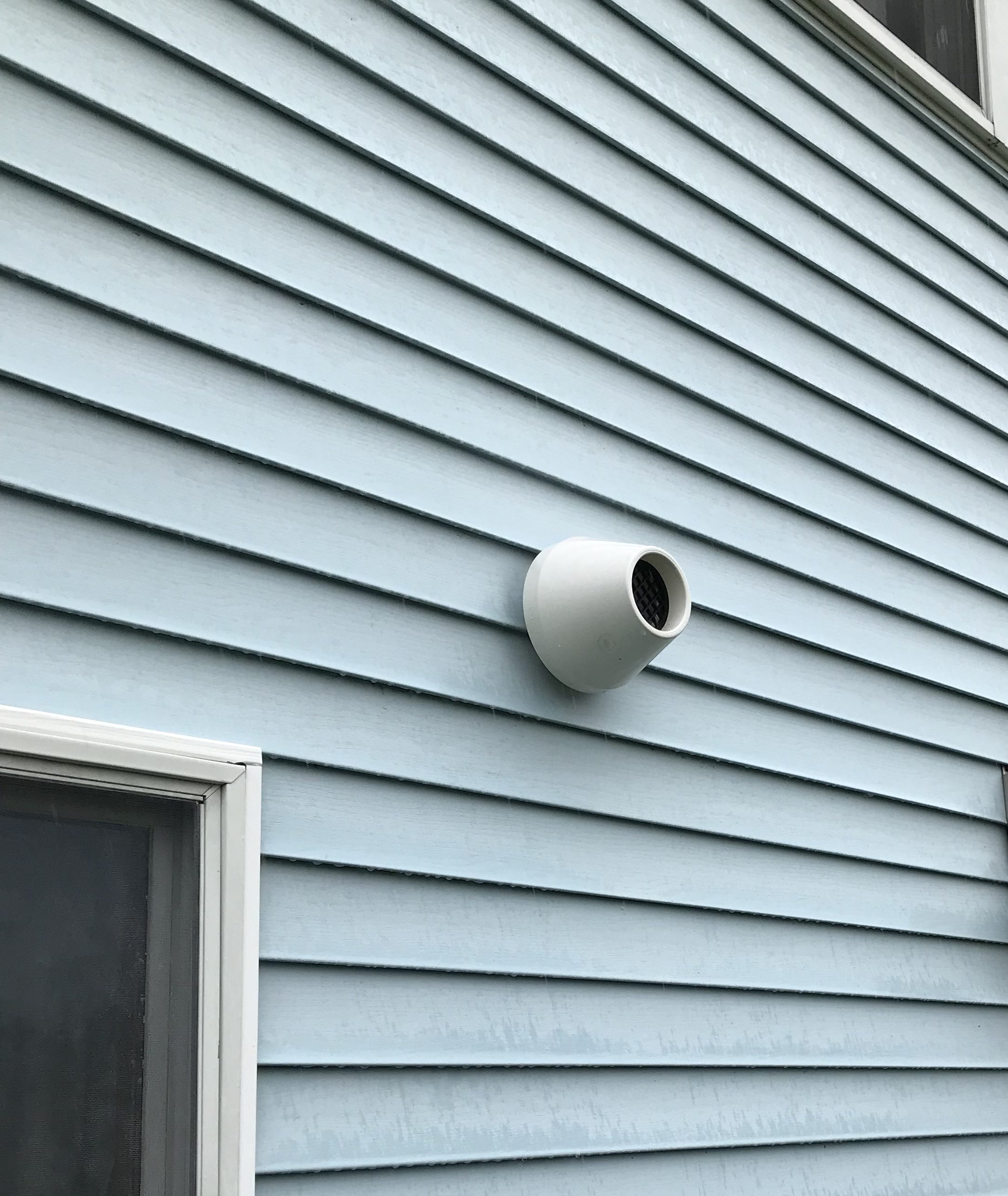
- Finished concentric vent kit
-

- Concentric vent installation
-

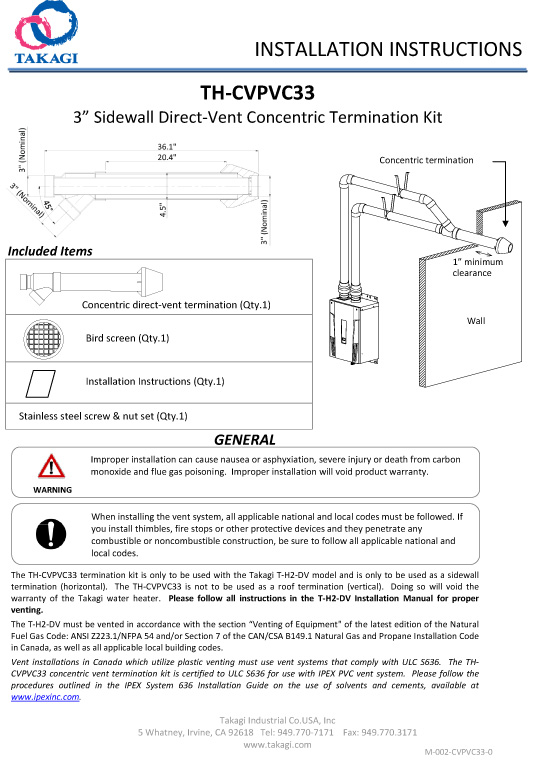
- Page 1 of installation instructions
-

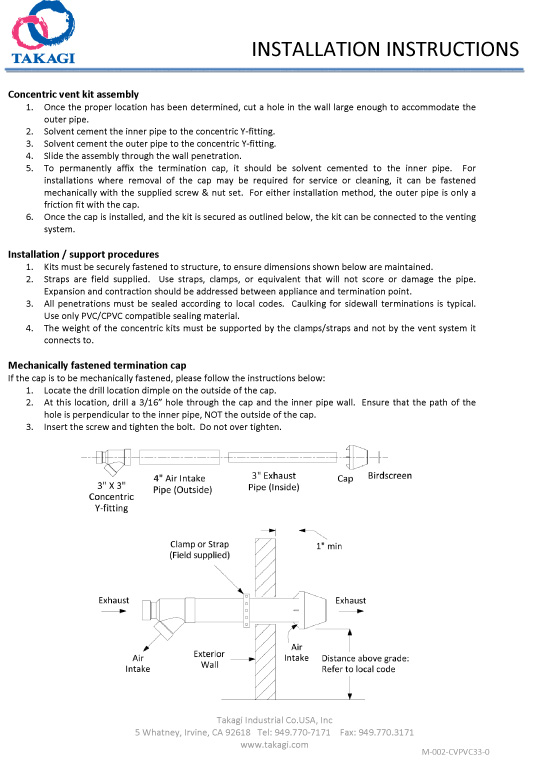
- Page 2 of installation instructions
A couple of side notes:
If your town or region has unusually hard water, that is, minerals in the water that could clog the heat exchanger in an on-demand water and shorten the unit’s life, a water softener might be a worthwhile investment.
And secondly, for those interested in technical and engineering details, the following may be interesting:
To find Heat source efficiency, calculate the heating unit’s BTU input, then multiply that number by its efficiency. This equals the unit’s actual BTU output (i.e., how much heating power the unit can truly deliver to your heated space).
Example: A 199,000 BTU unit with a 95% efficiency has an output of 189,050 BTUs. (199,000 X 95% = 189.050). This number will change and must be refigured (i.e., derated) for higher altitudes (above 5,000′). Contact a Technician for details.